PRECISION PUNCH COMPONENTS
Compare standard stamping punches, drawing-based custom punches, carbide punch options, and progressive die punch requirements before moving to detailed product review.
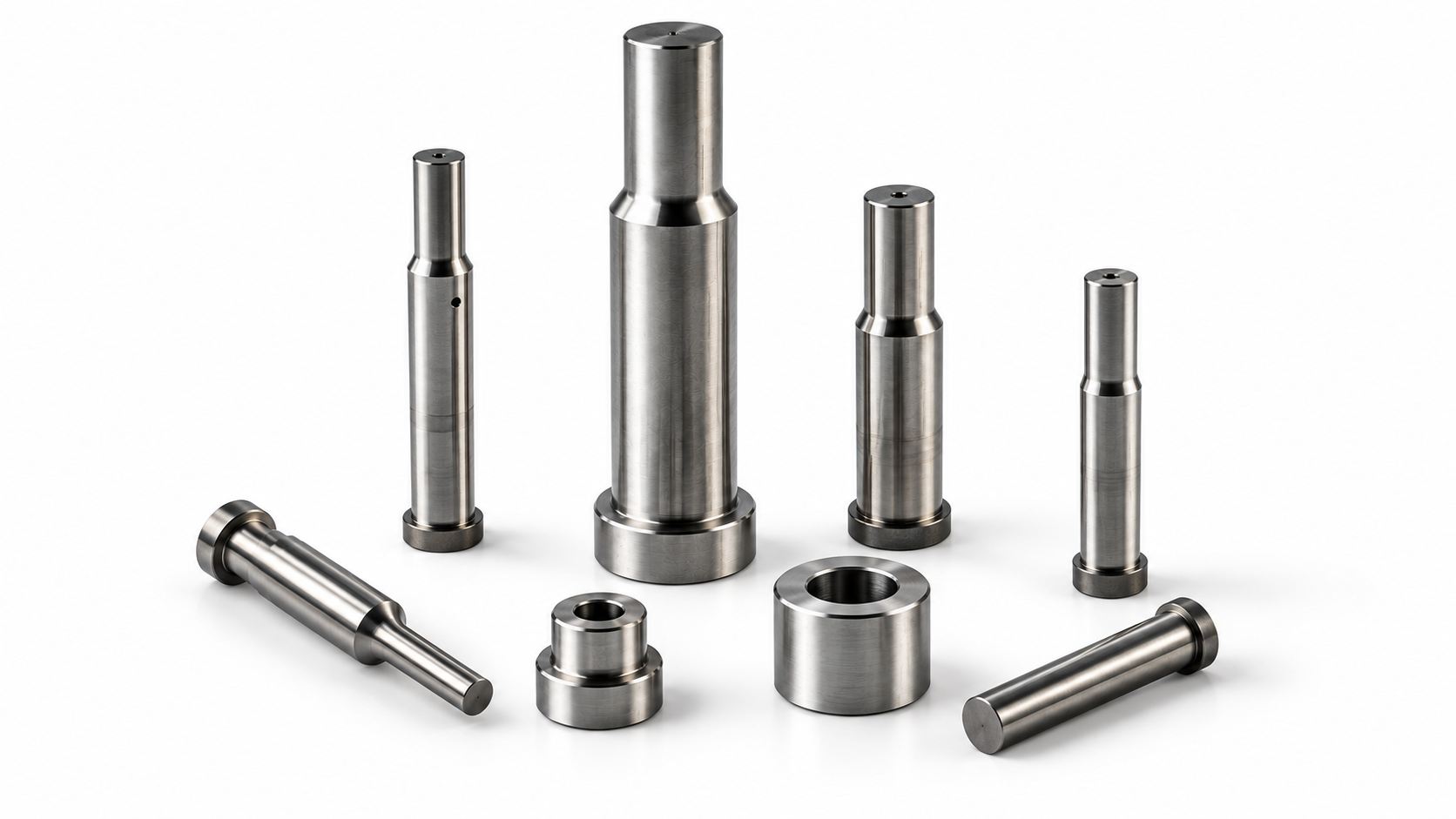
Punch families and sourcing paths
Use a part number or BOM for defined standard requirements, or send a controlled drawing and application details for custom engineering review.
Standard / Replacement
Standard Stamping Punches
Defined punch styles for die construction, maintenance, and replacement sourcing.
- Product types
- Straight, shoulder, keyed, and referenced punch forms
- Materials
- SKD11 / D2 or SKH51 / M2 / HSS by requirement
- RFQ input
- Part number, BOM, standard, key dimensions, and quantity
Drawing-Based Custom
Custom Punches
Special profiles, stepped sections, and non-standard punch geometry reviewed from the buyer drawing.
- Product types
- Special-shape, stepped, keyed, and small-diameter punches
- Materials
- SKD11 / D2, SKH51 / M2 / HSS, or SKH40
- RFQ input
- Drawing, revision, critical dimensions, material, and application
High-Wear / Custom
Carbide Punches
Tungsten carbide punch solutions reviewed against wear conditions, geometry, mounting, and impact risk.
- Material
- Tungsten carbide; grade confirmed during technical review
- Selection focus
- Wear demand, alignment, clearance, mounting, and failure mode
- RFQ input
- Drawing, production conditions, current life, and failure details
Application-Defined
Progressive Die Punches
Punch requirements reviewed in the context of the die station, work material, strip conditions, and production demand.
- Application
- Progressive die piercing, forming, and station-specific operations
- Selection focus
- Material, thickness, clearance, speed, lubrication, and alignment
- RFQ input
- Punch drawing, station data or strip layout, quantity, and failure mode
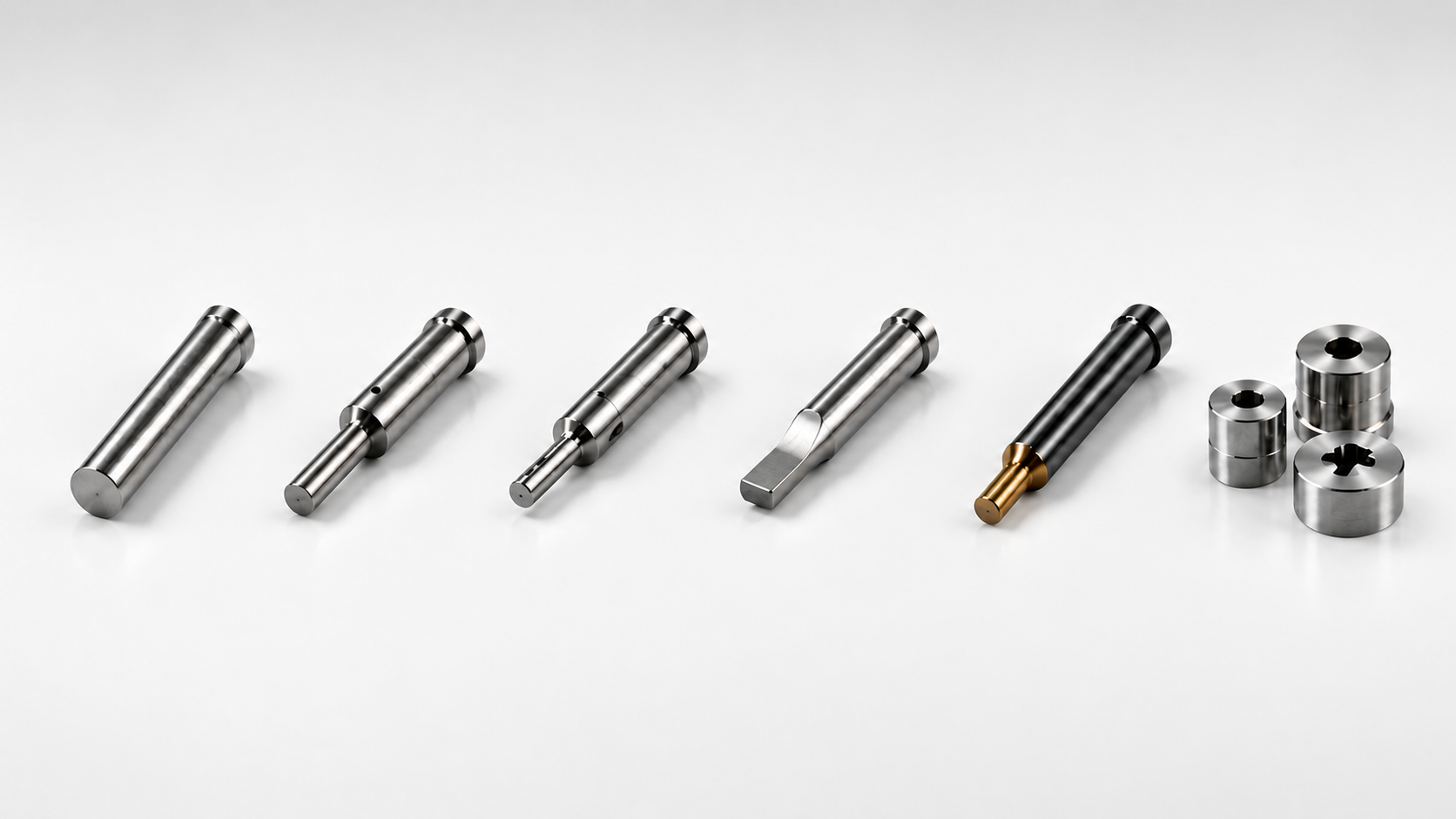
Ready to review a punch requirement?
Send the drawing or part reference, material, surface-treatment requirement, critical dimensions, quantity, application, and inspection needs.